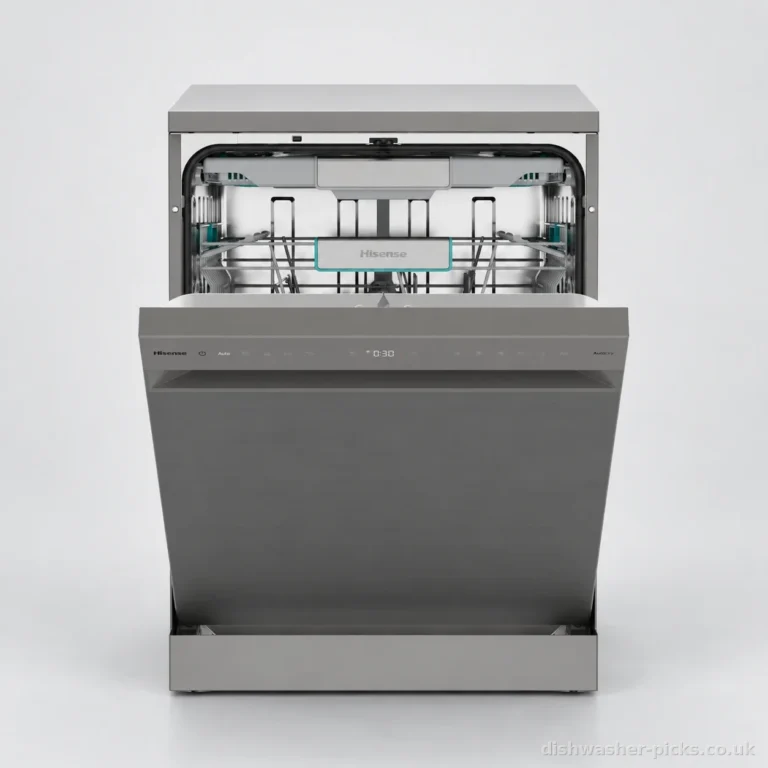
Thomson TDW4510SL2 or Miele G 7600 SC AutoDos: which should you choose?
Comparison of the two dishwashers using our catalogue's scoring criteria, value by value. Scores are relative to all the models we have analysed.
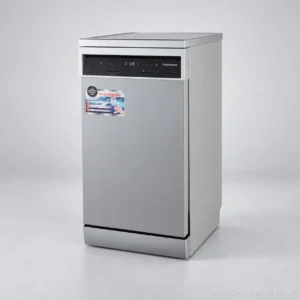
Thomson TDW4510SL2
Main drawbackLimited room for serving dishes and larger gatherings' crockery together
Read the full analysis →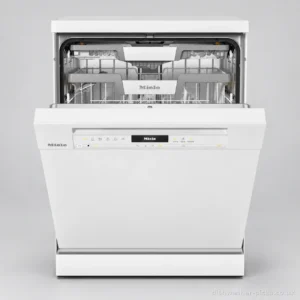
Miele G 7600 SC AutoDos
Main drawbackBulky cookware can still push the available loading space
Read the full analysis →Our verdict based on your priority
- Priority: “Place settings”Miele G 7600 SC AutoDos 8.2 / 10 vs 6.8
- Priority: “Noise level”Miele G 7600 SC AutoDos 8.5 / 10 vs 7.5
- Priority: “Eco program electricity consumption”Miele G 7600 SC AutoDos 9.2 / 10 vs 8.2
- Priority: “Eco program duration”Thomson TDW4510SL2 8.8 / 10 vs 8.2
By criterion
| Criterion | Thomson TDW4510SL2 | Miele G 7600 SC AutoDos |
|---|---|---|
| Place settings | 6.8 | 8.2 advantage |
| Noise level | 7.5 | 8.5 advantage |
| Eco program electricity consumption | 8.2 | 9.2 advantage |
| Eco program water consumption | 8.9 | 9.2 |
| Eco program duration | 8.8 advantage | 8.2 |
A gap of less than half a point does not count as an advantage: our scores are relative to the catalogue, and using them to pick a winner would imply a level of precision we cannot offer.
Side-by-side specs
| Specification | Thomson TDW4510SL2 | Miele G 7600 SC AutoDos |
|---|---|---|
| Width | 45 cm | 59,8 cm |
| Height | 85 cm | 84,5 cm |
| Depth | 60 cm | 60 cm |
| Place settings | 10 place settings | 14 place settings |
| Noise level | 44 decibels | 42 decibels |
| Eco program electricity consumption | 67,4 kWh/100 cycles | 54 kWh/100 cycles |
| Eco program water consumption | 9 L/cycle | 8,4 L/cycle |
| Eco program duration | 215 min | 230 min |
| Number of programs | 6 programs | Not provided |
| Repairability index | Not provided | 9,3 out of 10 |
| Installation type | Freestanding | Freestanding |
| Energy class | D | A |
| Use | Residential | Residential |
| End of cycle | Automatic door opening | Automatic door opening |
| Basket layout | Height-adjustable upper basket | Height-adjustable upper basket |
| Wash programs | Hygiene | Eco |
| Wash options | Half load | Half load |
| Drying technology | Automatic door opening | Condensation |
Figures published by manufacturers and retailers, compiled in our reviews. “Not provided” means the figure could not be verified.
Which is right for you?
Thomson TDW4510SL2
Leads on 1 criterion of 5 compared
- Eco program duration: 8.8/10 vs 8.2/10 (215 min vs 230 min)
Miele G 7600 SC AutoDos
Leads on 3 criteria of 5 compared
- Place settings: 8.2/10 vs 6.8/10 (14 place settings vs 10 place settings)
- Noise level: 8.5/10 vs 7.5/10 (42 decibels vs 44 decibels)
- Eco program electricity consumption: 9.2/10 vs 8.2/10 (54 kWh/100 cycles vs 67,4 kWh/100 cycles)
Comparison based on published specifications and our scores, calculated using the same criteria for every model. Our methodology →
Frequently asked questions
Which is rated higher, Thomson TDW4510SL2 or Miele G 7600 SC AutoDos?
Miele G 7600 SC AutoDos scores 8.7/10, compared with 7.9/10 for Thomson TDW4510SL2, using the same scoring criteria.
Which wins on “Place settings”?
Miele G 7600 SC AutoDos wins on “Place settings”: 8.2/10 compared with 6.8/10 for Thomson TDW4510SL2. Recorded values: 14 place settings versus 10 place settings.
Which wins on “Noise level”?
Miele G 7600 SC AutoDos wins on “Noise level”: 8.5/10 compared with 7.5/10 for Thomson TDW4510SL2. Recorded values: 42 decibels versus 44 decibels.
Which wins on “Eco program electricity consumption”?
Miele G 7600 SC AutoDos wins on “Eco program electricity consumption”: 9.2/10 compared with 8.2/10 for Thomson TDW4510SL2. Recorded values: 54 kWh/100 cycles versus 67,4 kWh/100 cycles.
Which wins on “Eco program duration”?
Thomson TDW4510SL2 wins on “Eco program duration”: 8.8/10 compared with 8.2/10 for Miele G 7600 SC AutoDos. Recorded values: 215 min versus 230 min.