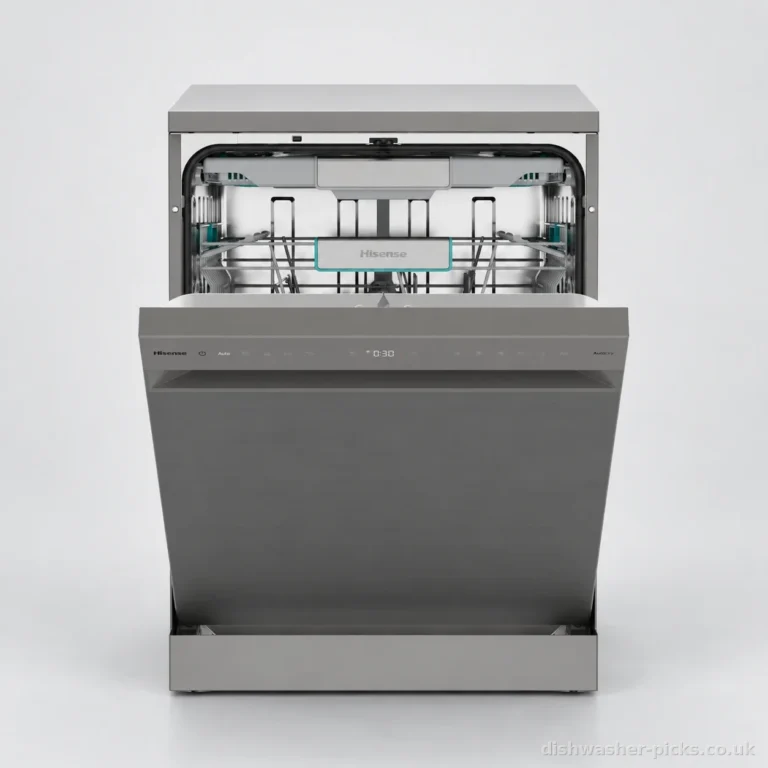
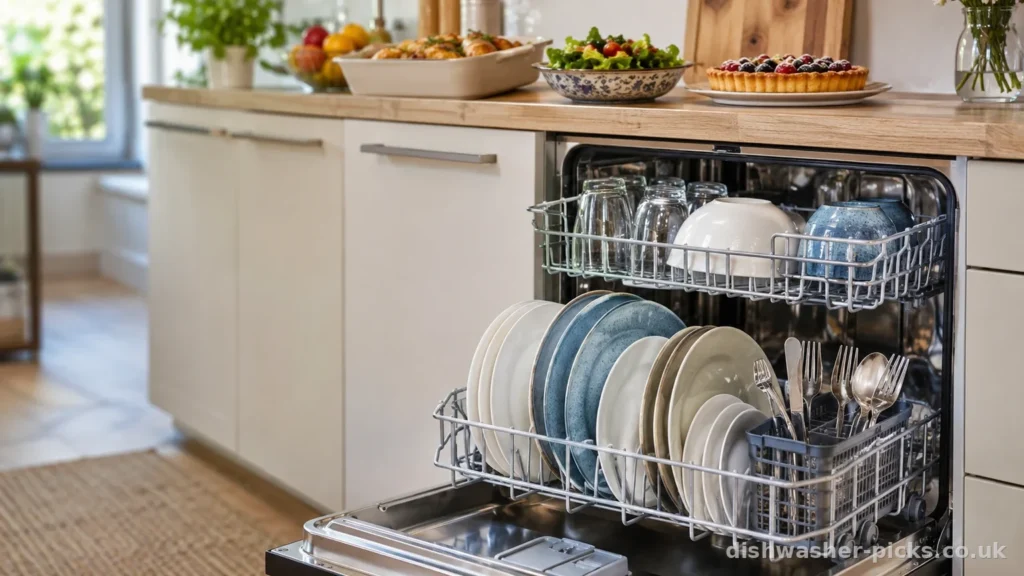
A family dishwasher should earn its place after an ordinary tea as well as a Sunday roast. We would start with the Hisense HS693A90XAD for generous loading space, low eco electricity consumption and restrained noise. A matching cupboard front, a crowded evening schedule or an especially busy kitchen can change that recommendation. The right choice leaves room for the cooking dishes without making the evening revolve around unloading, rearranging and having another go.
Contents
- Which dishwasher should a large family choose for the daily pile?
- Does the largest dishwasher capacity help after a family Sunday roast?
- Which quiet dishwasher suits a kitchen beside the evening film?
- How should a large family compare eco use before washing overnight?
- Will your family dishwasher suit the kitchen and the morning routine?
- Frequently asked questions
- How many place settings does a large family need?
- Is the Miele a good integrated dishwasher for a large family trying to cut electricity use?
- Does a long eco programme use more electricity and water?
- Is a cutlery drawer essential for family washing up?
- What is the difference between fully integrated and semi-integrated dishwashers?
Which dishwasher should a large family choose for the daily pile?
Our first choice for a large family wanting a freestanding dishwasher is the Hisense for everyday family loads. Its combination of 16 place settings, restrained declared noise and low eco electricity consumption addresses the jobs that keep returning: clearing dinner, accommodating cooking dishes and getting the kitchen ready for breakfast. It is among the highest-rated models in this selection, with capacity, quietness and low eco electricity use making the strongest case for it.
Start with what accumulates between washes. Does the dishwasher take breakfast bowls, packed lunch containers and the evening meal together? Are you cooking from scratch, leaving saucepans alongside the plates? A family that eats lunch elsewhere can produce a very different load from a household where the kitchen is busy all day. Count the awkward items as well as the easy stack of plates.
The Hisense capacity gives generous room for serving dishes and saucepans. Its height-adjustable upper basket offers useful flexibility when a taller item changes the shape of the load, while the cutlery drawer provides a separate place for forks, knives and spoons. We like that combination because family washing up rarely arrives in matching sets. The cereal bowls tend to have their own ideas.
Place settings describe a standardised loading measure covering plates, glasses and cutlery, rather than an exact number of diners. Treat capacity as a starting point, then consider the shape of your bowls, the height of your glasses and the containers you use every day. For stemmed glasses from a dinner with friends, think about the space they need alongside the next morning’s mugs.
Give your ordinary weekday more influence than the occasional gathering. A machine chosen entirely around Christmas dinner still has to handle school-night pasta, lunchboxes and the pan used for the sauce. An adjustable basket is relevant here because the balance between tall glasses and bulky cooking dishes changes with the menu. Capacity gets an appliance onto the shortlist; the arrangement helps you choose.
Avoid this model if your kitchen design calls for an appliance concealed behind a matching furniture door: it is freestanding. For the daily family brief, though, its balance is persuasive. Choose it when substantial loads are routine and you want useful basket adjustment without making programme selection the main event of the evening.
Does the largest dishwasher capacity help after a family Sunday roast?
The Hotpoint for substantial family loads belongs on your shortlist when loading capacity leads your decision. At 16 place settings, it shares the highest place-setting capacity in this selection. That is relevant when dinner brings serving bowls, pans and plenty of cutlery into the same queue, although it does not make this model our automatic first choice.
The capacity gap between the smallest and largest choices is substantial, reaching double or more. This criterion genuinely changes the recommendation. Across the wider selection, capacities run from 2 place settings to 16 place settings. A compact appliance and a generous family machine answer different questions, even when both offer an eco programme.
For a Sunday roast, consider the whole clear-up rather than the number of chairs around the table. The plates may be easy to accommodate; a broad serving dish changes the arrangement. Think about your usual roasting tin, casserole dish and mixing bowl when deciding what needs room. The capacity figure gives a useful scale, but it does not describe the precise shape of every load.
Be particularly practical about the dishes you need again soon. If a favourite saucepan is needed for both dinner and tomorrow’s breakfast, leaving it inside a long-running programme may complicate the morning. More loading space helps gather the washing up together, but your meal schedule still determines what goes in and when. A large family needs a workable routine as much as a large interior.
The Hotpoint also has restrained declared noise at 42 decibels, making its large-load credentials relevant to a kitchen adjoining the living room. Its eco electricity consumption is 66 kWh/100 cycles, an average figure in this comparison. Eco water consumption of 9.9 L/cycle is our main reservation. We would not choose it primarily to reduce water use.
Its eco programme takes 240 min, so it suits an evening wash followed by unloading in the morning. Avoid it if your routine depends on getting the same dishes back into use soon after dinner. Capacity alone does not give the Hotpoint an advantage over the Hisense: both offer 16 place settings, while their eco electricity figures are 66 kWh/100 cycles and 55 kWh/100 cycles respectively. For our freestanding family recommendation, that keeps the Hisense ahead.
Which quiet dishwasher suits a kitchen beside the evening film?
A dishwasher can sit close to the sofa in an open-plan home, so declared noise belongs near the top of the shortlist. Our integrated choice when sound is the leading concern is the Grundig for an open-plan kitchen. Its declared level of 40 decibels shares the lowest figure in this selection. That supports choosing it for washing up while the living room is still occupied.
Keep the comparison in proportion, though. The noise figures are close enough that this criterion does not decisively separate the choices by itself. A small numerical advantage should not outweigh the capacity, electricity consumption and installation format you need. Nor does a declared sound figure promise that nobody will hear the appliance when you put it on before bed.
Think about where your household spends the evening. In a kitchen opening directly onto the sitting room, the wash may overlap with homework at the table, a film or someone reading nearby. In a separate kitchen, the sound figure may deserve less influence. We would use noise to refine a shortlist of suitable family machines, rather than let it overrule every other consideration.
The Grundig offers 16 place settings, giving it a strong family loading case alongside its restrained noise. A cutlery drawer and height-adjustable upper basket add flexibility for changing assortments of bowls, utensils and glasses. Its 11 programs provide the broadest programme choice among these models. That difference is clear, although more settings only help if you actually want to use them.
What holds us back is eco electricity consumption of 77 kWh/100 cycles, the highest figure among these choices. The electricity gap is clear enough to influence a household running frequent loads. Avoid it if reducing electricity use is your main aim. Its eco water consumption of 9.5 L/cycle is average, and the eco duration of 252 min favours an overnight routine.
For a freestanding arrangement, the Hisense has a declared noise level of 40 decibels, supporting its place in an open-plan family kitchen. Choose according to the furniture arrangement as well as the sound figure. Declared noise, water and electricity figures apply to the energy label’s eco programme, never to the intensive or quick programme. The eco sound figure therefore needs to sit alongside the setting you expect to use.
How should a large family compare eco use before washing overnight?
Choose the Miele for efficient integrated washing when low eco consumption matters alongside family capacity. Its 14 place settings provide generous room for serving dishes and saucepans. Eco electricity consumption of 54 kWh/100 cycles is the lowest among these choices. That gives a household regularly filling the machine a concrete reason to favour it.
Its eco water consumption is 8.4 L/cycle, among the lower figures in the wider selection. We like the balance here: substantial loading capacity with restrained resource use. The cutlery drawer gives utensils their own space, and a half-load option is available for occasions when the family routine produces less washing up. Do not read that option as a promise to halve consumption.
Avoid choosing by energy class alone. The Miele carries class A, but the consumption figures and capacity explain more about the particular job you need it to do. Compare appliances of similar capacity first. A small machine can consume less overall while using more per plate, especially if the household needs repeated loads to clear dinner. Our recommendation here rests on the combination, rather than the letter in isolation.
The compact Klarstein for small kitchen loads has the lowest eco water figure here at 8 L/cycle. However, the water figures are close enough that they do not decisively separate these choices. Its 8 place settings make it a choice for small loads and restricted kitchen space. Avoid it for regular large clear-ups or a kitchen where low noise leads the brief.
The Klarstein’s declared noise of 49 decibels makes running it while you are elsewhere more appealing than putting it beside an occupied sitting area. Its compact capacity remains the bigger objection for this guide’s main audience. Saving water on an individual cycle does not settle how conveniently a machine handles the whole family’s washing up.
Eco duration needs the same perspective. The Miele takes 230 min; schedule it around when you next need the dishes. The durations across these choices are close enough that they should not decide the purchase alone. A long eco programme is not a fault: taking longer is precisely how it saves resources. Choose this model for concealed installation and low eco consumption; avoid it if maximum place-setting capacity is your overriding requirement.
Will your family dishwasher suit the kitchen and the morning routine?
Settle the installation format before falling for a capacity figure. A freestanding appliance has its own visible front. For a fully integrated model, your kitchen provider supplies a matching furniture panel separately from the appliance, covering its front. A semi-integrated dishwasher leaves the control panel visible, so check which finish your kitchen requires before ordering.
For the Hisense, the dimensions are 59.9 cm wide, 84.6 cm high and 59.8 cm deep. Measure the available space and consider the route from the delivery entrance to the kitchen. Doorways, corners and the room needed to open the appliance all matter. A dishwasher that leaves you negotiating with a hallway is already demanding too much conversation.
The fully integrated Miele measures 59.8 cm wide, 80.5 cm high and 55 cm deep. The fully integrated Grundig measures 59.8 cm wide, 81.8 cm high and 55 cm deep. Its sliding furniture-door fixing belongs in the fitting discussion too. Include the panel arrangement in your kitchen plan rather than treating it as a finishing touch.
Think about unloading as well as loading. Where will clean mugs go while someone makes breakfast? Can the person emptying the dishwasher reach the cutlery storage without blocking the household’s morning traffic? These are useful questions to settle with your kitchen layout in front of you. The most generous capacity becomes less helpful if unloading turns into a daily shuffle around an open door.
The Hisense includes an intensive programme and an option to reduce programme time. Those choices give you alternatives when the evening changes, but keep the eco figures attached to the eco setting. Choose around the programme you expect to use routinely, then treat the other settings as useful additions. An impressive collection of buttons cannot organise tomorrow’s packed lunches for you.
Before ordering, agree delivery, removal of the old appliance and who handles fitting. Read the warranty, returns policy and after-sales arrangements, and establish the country of manufacture if that influences your choice. Our freestanding family recommendation remains the Hisense; for integrated installation and low eco consumption, choose the Miele. The Hotpoint belongs on a capacity-led shortlist, while the Grundig makes sense when restrained declared noise and adjustable loading lead your priorities.
Our picks for this topic
The dishwashers we recommend here
| Model | Rating | Width | Height | Deal |
|---|---|---|---|---|
 AEG FSE54600Z | 7.4/10 | 59.6 cm | 81.8 cm | Check price on Amazon →Our analysis |
 Beko BDIN18441Top-rated pick | 8.2/10 | 59.8 cm | 81.8 cm | Check price on Amazon →Our analysis |
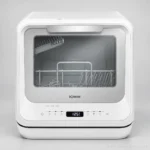 Bomann TSG 5704 | 7.9/10 | 42 cm | 44 cm | Check price on Amazon →Our analysis |
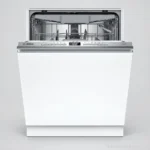 Bosch SMV4EVX02F | 8/10 | 59.8 cm | 81.5 cm | Check price on Amazon →Our analysis |
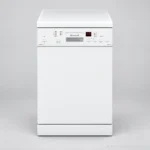 Brandt DFS1010W | 7.4/10 | 44.8 cm | 84.5 cm | Check price on Amazon →Our analysis |
Selected based on our reviews: models relevant to this guide, rated using the same criteria as our full catalogue. Prices change: check the retailer’s site for current pricing. As an Amazon Associate, we earn from qualifying purchases.
Frequently asked questions
How many place settings does a large family need?
Start with the washing up produced between loads, including cooking dishes and lunch containers. Place settings measure a standardised load rather than an exact number of diners. The Hotpoint offers 16 place settings, sharing the highest capacity in this selection and making it a strong starting point for substantial family loads.
Is the Miele a good integrated dishwasher for a large family trying to cut electricity use?
Yes. The Miele combines 14 place settings with eco electricity consumption of 54 kWh/100 cycles, the lowest figure among these choices. We recommend it for families wanting concealed installation and low eco consumption. Compare capacity alongside consumption rather than choosing by energy class alone.
Does a long eco programme use more electricity and water?
A long eco programme is not a fault: taking longer is precisely how it saves resources. Compare the stated consumption figures rather than judging by duration. For a family, the practical question is whether the dishes will be ready before breakfast or the next meal.
Is a cutlery drawer essential for family washing up?
No, but it can help organise utensils separately from the main load. The Hisense combines a cutlery drawer with a height-adjustable upper basket, a useful arrangement for changing family loads. Choose around your bowls, glasses and cooking dishes rather than making the drawer the deciding factor.
What is the difference between fully integrated and semi-integrated dishwashers?
A fully integrated dishwasher has its front covered by a matching kitchen furniture panel, supplied by the kitchen provider separately from the appliance. A semi-integrated dishwasher leaves the control panel visible, so check which finish your kitchen requires before ordering.
Was this article helpful?
0% of readers found it useful (0 reviews)